From urban centers to smaller communities throughout DC, Forge Siding deploys locally based crews for residential and commercial Siding projects. Licensed statewide, manufacturer-certified, and backed by a written workmanship guarantee on every project we complete.

Forge Siding operates throughout District of Columbia, DC with locally based installation crews — not a regional dispatch center routing jobs to whoever is available. Our lead installers carry manufacturer certifications on every major cladding system, and they bring those credentials to projects in every part of DC we serve. License verification, insurance certificates, and manufacturer credential documentation are provided at first contact for every project statewide.
We've watched enough regional siding contractors come and go in District of Columbia, DC to know what separates a company that lasts from one that doesn't: it's the quality of the written estimate, the transparency of the project communication, and the honesty of the close-out process. Our DC reputation is built on all three.

Most DC homeowners don't discover siding failure until the damage is already inside the wall. These are the early warning signs that make a meaningful difference when caught first.
Hairline fractures look minor from the ground. At arm's reach, they're a different story — especially on fiber cement, where surface spalling around impact points creates water entry that accelerates sheathing damage.
Moisture staining on drywall adjacent to exterior walls, soft spots when you press the wall surface, or a persistent musty odor in rooms with exterior exposure all indicate water has been working through the building envelope. By the time interior symptoms appear, the sheathing has usually been wet for weeks.
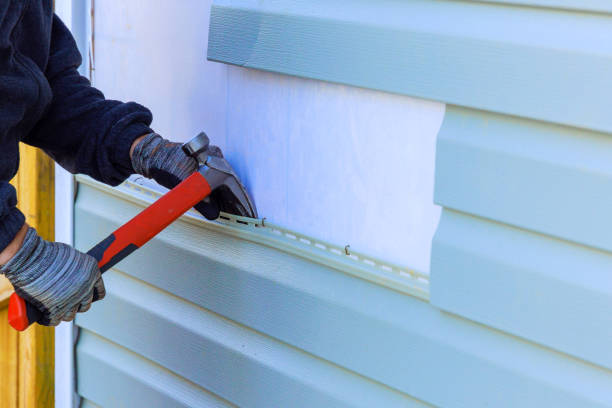
Buckled vinyl almost always points to panels installed without adequate expansion room — nailed too tight to absorb thermal movement across District of Columbia, DC's seasonal temperature swings. As the deformation progresses, the panel lock opens at high-heat peaks, creating gap points for wind and water.
On fiber cement, paint peeling from the face within a few years of installation often indicates field cuts that were not back-primed before installation, allowing moisture to enter the panel edge and migrate outward behind the paint film.
Dark streaking from nailheads on vinyl or fiber cement siding indicates non-galvanized or insufficiently corrosion-resistant fasteners. As fasteners corrode, they weaken and eventually fail — a panel secured by a corroded nail is a panel waiting to separate in a windstorm.
{{A compromised siding system — failed housewrap, missing caulk at penetrations, gaps at panel joints — creates air infiltration pathways that significantly increase HVAC load. If your energy bills in DC have risen without a clear explanation, the building envelope is worth investigating before assuming appliance or insulation issues.|Wall air leakage through siding system failures can account for 10-20% of heating and cooling load in District of Columbia, DC climates. A proper siding repair or replacement that restores the envelope's air-sealing function often produces measurable utility savings within the first full heating or cooling season.}}
Our statewide Siding operation maintains consistent service standards across every District of Columbia, DC community we work in.
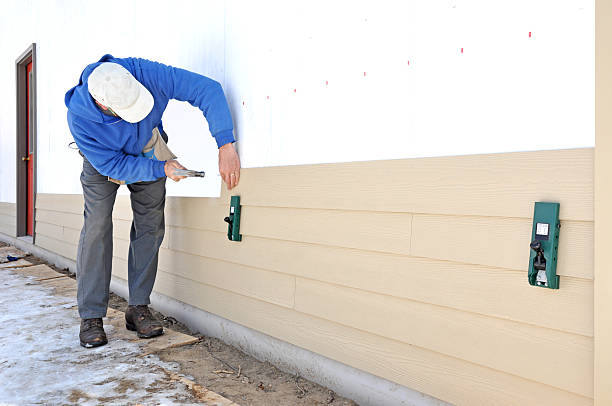
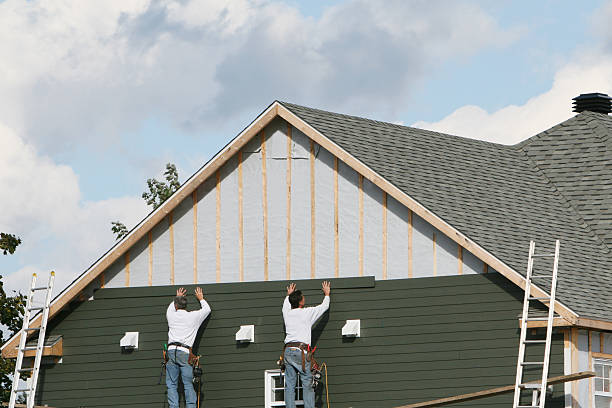
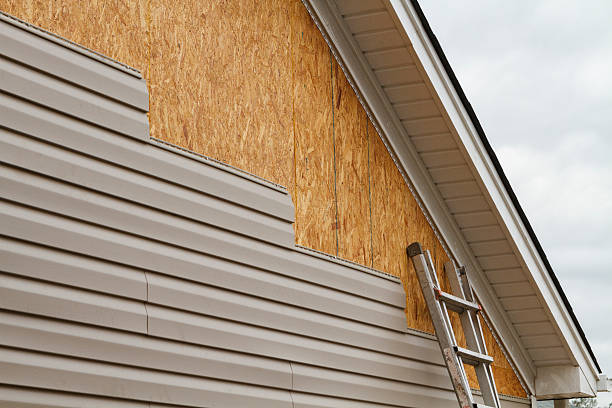
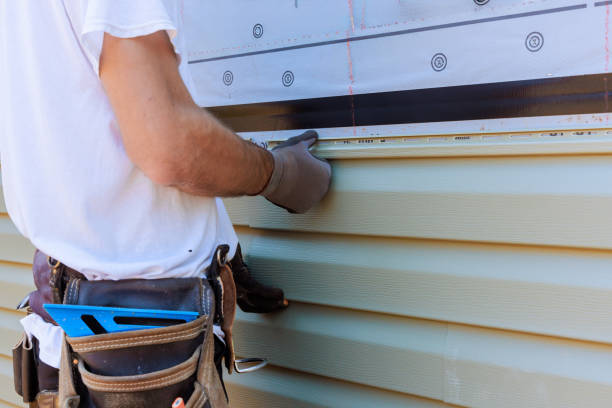
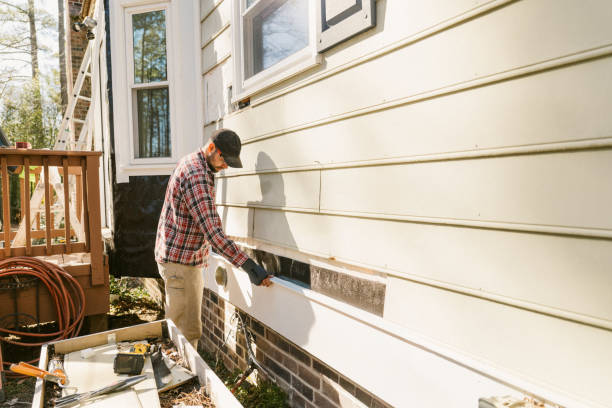
New residential siding in District of Columbia, DC covers the full installation scope: housewrap, flashing at penetrations, panel installation per manufacturer specification, and complete trim systems at corners, windows, doors, and the roofline. We handle full tear-off replacements on existing homes and new construction installation alongside framing crews and GCs. Our District of Columbia, DC installation teams are certified on vinyl, fiber cement, engineered wood, and steel panel systems — with the installation documentation to preserve manufacturer warranty coverage on every product.

District of Columbia, DC properties face storm events ranging from hail to high-wind events to hurricane-related damage along coastal and exposed areas. Our DC storm response operation includes rapid post-storm dispatch, emergency board-up for critically exposed wall sections, panel-level damage documentation for insurance claims, and prioritized repair scheduling. We've worked with every major insurance carrier active in DC and understand what adjuster documentation requires.

Each cladding material has distinct installation requirements, and our District of Columbia, DC crews hold certifications specific to each product they install. Fiber cement requires back-priming at every field cut, specific fastener types, and a documented fastener schedule for warranty preservation. Vinyl requires correct expansion gap calibration for District of Columbia, DC's seasonal temperature range. Wood siding demands moisture content testing at delivery, species-appropriate nailing patterns, and end-grain sealing at every butt joint. We don't apply one generic installation approach across all materials.

Commercial siding projects throughout District of Columbia, DC require a different operational approach than residential work: engineered wind-load fastener schedules, special inspection documentation in applicable jurisdictions, coordination with building management on occupied-building scheduling, and standardized reporting for HOA board records and reserve fund planning. Our District of Columbia, DC commercial team handles all of these requirements as standard practice — not as extras that require additional conversations.

Consistency matters in a statewide operation. The same pricing transparency, the same installation standards, and the same warranty documentation apply whether the project is in a major District of Columbia, DC city or a smaller community.
Every estimate we provide throughout DC is a written line-item document. Materials, labor, permit fees, and disposal costs are listed separately. No lump-sum guesses — every component is visible before you sign.
Local dispatch also means local accountability. The crew working on your property operates in District of Columbia, DC communities — reputation matters to them in a way it doesn't to an out-of-state operation.
Our DC contractor license is current, disciplinary-history-free, and publicly verifiable in the state database. We provide the license number at first contact and actively encourage verification. GL and workers' comp certificates are available before project start.
Every project in DC closes with a signed workmanship warranty document — specific about what's covered, for how long, and how to invoke it. Not a verbal assurance — a document you can file, reference, and enforce.
No process differences between markets. Every District of Columbia, DC client gets the same communication cadence, the same documentation standards, and the same warranty package.
Scheduled within 24–48 hours of your call. We measure all surfaces, document existing conditions with photos, and probe for substrate moisture issues before building the estimate.
The estimate is the document that becomes the contract. Everything in the project's scope is visible before you sign.
Permit processing timelines vary across District of Columbia, DC jurisdictions. We factor them into the schedule and communicate any permit delays before they affect your start date.
Daily progress updates from the lead installer. Unexpected findings documented with photos and handled via written change order before additional work proceeds. Site cleaned each afternoon before the crew leaves.
The close-out package is the same across all District of Columbia, DC projects — complete documentation that serves as the record for insurance, HOA, and resale purposes.
They handled the HOA board documentation — permits, warranty registrations, per-building project photos — without us having to ask. Everything was organized and delivered before final payment.
Storm damage response was faster than I expected for an after-hours call. Someone answered, triaged the situation, and had a crew on site the next morning. That's a statewide operation that actually works.
The line-item estimate was the deciding factor. Two other contractors gave lump-sum numbers with no breakdown. Forge Siding listed every material component, labor item, and the permit fee separately. That transparency was the signal I was looking for.
Insurance documentation package after a hail event was exactly what the adjuster needed. Panel-level photos, written scope by elevation — the claim was approved at full replacement value on first review.
We had a warranty question about a caulk joint 14 months after completion. Called the office, the lead installer came back within three days and addressed it at no charge. That's what a written guarantee actually looks like in practice.
The permit and inspection process was completely handled without us. The inspector came, signed off, and we received the permit record in the close-out package. I've done projects where chasing the permit took weeks — this was invisible to us as homeowners, which is exactly how it should work.
Every community in DC receives the same service standard: licensed crews, line-item pricing, written workmanship warranties, and a complete close-out documentation package at project completion.
Reach our DC team now — same-day assessment available for emergencies, standard scheduling within 24–48 hours for non-emergency projects.
📞 Call Now: +1-844-782-0929